Struggling to finish tasks, feeling quickly overwhelmed by household chores, or frequently running late? These may be signs that your executive functions are not working at their best. While many people are familiar with these experiences, understanding what they really mean and what you can do about them is essential. Managing ADHD adds an extra layer of complexity for pilots, air traffic controllers, and other professionals who must maintain medical certification.
Regulatory bodies have strict rules regarding ADHD medications, which can affect certification. This makes non-medication strategies such as structured routines, cognitive-behavioral techniques, lifestyle adjustments, and organizational tools not just helpful but essential. In this first part of a two-part series, we will explore what ADHD is, what it is not, and how understanding it can help you move forward more effectively.
What Is ADHD?
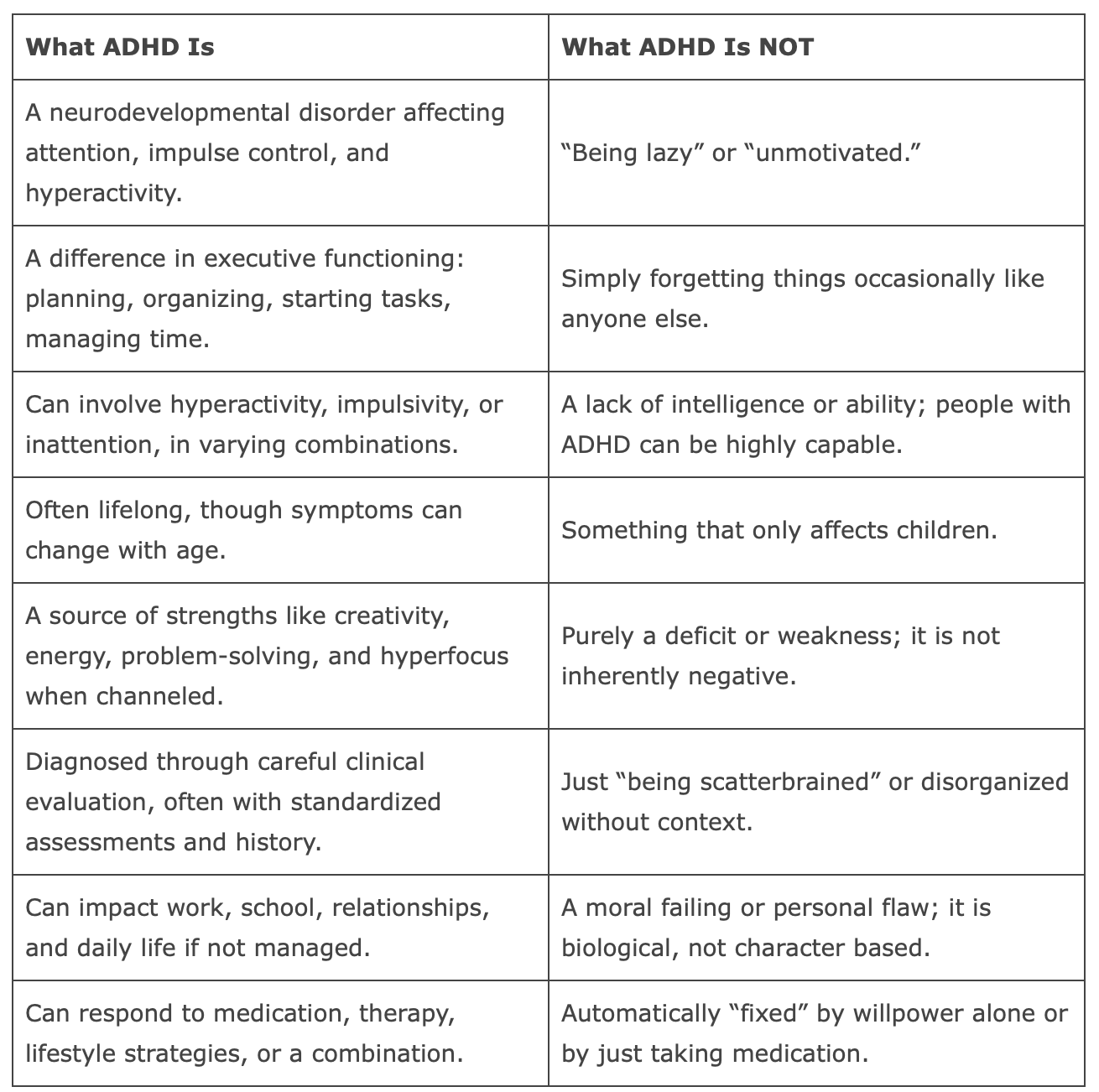
ADHD is often misrepresented on social media platforms, where it is portrayed through oversimplified trends or self-diagnosis videos. This reduces a complex neurodevelopmental condition to quirky behavior, further spreading misinformation. Such portrayals trivialize real struggles, stigmatize those genuinely affected, and can lead to misdiagnosis or people dismissing ADHD as an online trend.
To distinguish real ADHD from social media misconceptions, it is crucial to look beyond trends and focus on consistent patterns across time and settings, like chronic inattention, impulsivity, and difficulty with organization that impair daily life. An ADHD diagnosis involves professional evaluation, not self-assessment, and considers medical history, behavior reports, and standardized clinical criteria.
Before diving into strategies and support, it is important to understand what ADHD actually is. Attention Deficit/Hyperactivity Disorder (ADHD) is a neurodevelopmental condition. While the exact cause is not fully known, people with ADHD show consistent patterns of inattention, hyperactivity, and/or impulsivity that can interfere with daily life—at work, school, home, and in relationships. These core symptoms appear in different ways and combinations depending on the individual. ADHD often begins in childhood, but approximately 2.5% of people continue to experience symptoms into adulthood. As responsibilities increase, planning, organization, and punctuality become essential.
Different Types of ADHD
Predominantly Hyperactive-Impulsive Type: Here, hyperactivity and impulsivity are the most noticeable symptoms.
Predominantly Inattentive Type: Often referred to as ADD, this type is marked mainly by attention difficulties, with little or no hyperactivity or impulsivity.
Combined Type: As the name suggests, this type involves a combination of inattention, hyperactivity, and impulsivity.
Inattention Can Look Like:
Being easily distracted by irrelevant stimuli or thoughts
Difficulty finishing tasks
Trouble maintaining focus over time
Problems following instructions or listening carefully
Struggles with organizing tasks and activities
Avoiding mentally demanding tasks
Frequently losing items
Forgetfulness
Hyperactivity and Impulsivity Can Look Like:
Blurting out answers before a question is finished
Difficulty participating quietly in activities
Difficulty waiting for your turn
Interrupting others
Fidgeting, tapping hands or feet.
Feeling restless
Trouble staying seated
Talking excessively
Executive Functions Explained
Your executive functions are the brain’s higher-level control systems that help you engage in goal-directed behavior, like planning a task, getting started without procrastination, and staying focused. When your executive functions are not working optimally, these everyday tasks can feel much harder. You might struggle to start a task, miss deadlines, or lose important items. It can also show up as difficulty controlling impulses, failing to keep commitments, or overestimating what you can handle.
Less Efficient Executive Functions
Executive functions are partly influenced by genetics, which can make them harder to improve. One of the most common conditions where this occurs is ADHD, which can challenge almost all executive functions. Difficulties with these skills can also be a sign of another mental health condition, such as anxiety or depression.
But it is not just about biology. These skills also develop through practice. For example, a highly intelligent child might have been able to get by for years without planning or organizing effectively. As a result, these executive functions may not have been sufficiently exercised and may remain underdeveloped.
The Hidden Strengths Of ADHD
ADHD is often framed as a set of challenges: difficulty focusing, impulsivity, and hyperactivity. That’s only part of the story. People with ADHD also carry unique strengths that neurotypical brains often do not possess. When recognized and understood, these traits can become superpowers in both work and life.
Creative problem-solving: ADHD minds excel at connecting dots in unexpected ways, often generating ideas others would not even consider.
Hyperfocus: When a task truly sparks interest, individuals with ADHD can dive deep, working with laser-like intensity and producing remarkable results.
Boundless energy and enthusiasm: Their vitality can energize teams and inspire others, turning ordinary projects into exciting endeavors.
Adaptability and spontaneity: Change? No problem. Quick thinking and comfort with uncertainty make them excellent in dynamic environments.
Risk-taking and entrepreneurial spirit: Willingness to explore unconventional paths often leads to innovation and breakthrough thinking.
Resilience and persistence: Years of navigating a world designed for neurotypical minds increase resilience, problem-solving skills, and perseverance.
Empathy and social intuition: Many with ADHD are finely attuned to emotions, able to pick up on cues others miss.
Pattern recognition and intuition: They can notice trends and possibilities quickly, even if the process seems messy or nonlinear.
Final Thoughts
Especially in today’s world, ADHD is often misunderstood. Rather than being a defect, ADHD is a different operating system for the brain, one with its own strengths and ways of functioning. ADHD is not something to “fix.” It’s something to understand and have helpful strategies for. Part two of this series will continue this topic.
Understanding how your brain works allows you to create systems that support you rather than fight against you. This shift can reduce stress and improve both personal and professional performance. Support also matters.
Emerald Mental Health offers an affirming, strengths-based approach to helping individuals understand their brains better and develop practical tools. Reach out to reini@emeraldmentalhealth.com or go to www.emeraldmentalhealth.com for more information
Resources
ADD Resource Center. ADHD myths vs. facts. https://www.addrc.org/adhd-myths-vs-facts-what-you-need-to-know/
Cleveland Clinic. (2025). 7 myths about ADHD. https://health.clevelandclinic.org/myths-about-adhdCleveland Clinic
National Institute of Mental Health. (2023). Attention-deficit/hyperactivity disorder. https://www.nimh.nih.gov/health/topics/attention-deficit-hyperactivity-disorder-adhd
